Healthy People 2030 Educational Objectives
|
| ||
Method
Data is collected by the national education associations representing all schools in five major health professions: allopathic and osteopathic medicine; bachelor’s and advanced practice nursing; physician assistants; pharmacy; and dentistry. These associations have convened since 2002 as the Healthy People Curriculum Task Force by the Association for Prevention Teaching and Research (APTR). In early 2022, the Task Force collected baseline data to convert developmental objectives to core objectives. The rigorous process resulted in five new core objectives focusing on the environmental health curriculum content area. Mid-decade data will be collected in 2025 and end-of-decade data in 2028.
Baseline Statement (Health professions combined)
At baseline, 74.84% of health professions education programs included environmental health content in a required learning experience.
Numerator: Total number of health professions training program respondents (by discipline) that include environmental health content in a required learning experience.
Denominator: Total number of health professions training program respondents (by discipline).
Data is collected by the national education associations representing all schools in five major health professions: allopathic and osteopathic medicine; bachelor’s and advanced practice nursing; physician assistants; pharmacy; and dentistry. These associations have convened since 2002 as the Healthy People Curriculum Task Force by the Association for Prevention Teaching and Research (APTR). In early 2022, the Task Force collected baseline data to convert developmental objectives to core objectives. The rigorous process resulted in five new core objectives focusing on the environmental health curriculum content area. Mid-decade data will be collected in 2025 and end-of-decade data in 2028.
Baseline Statement (Health professions combined)
At baseline, 74.84% of health professions education programs included environmental health content in a required learning experience.
Numerator: Total number of health professions training program respondents (by discipline) that include environmental health content in a required learning experience.
Denominator: Total number of health professions training program respondents (by discipline).
Baseline Data: Six Core Content Areas Combined
HPCTF Mission
Increase core clinical prevention and population health content in health professions education.
Method
Data is collected by the national education associations representing all schools in five major health professions. In early 2022, baseline data was collected in six core content areas of the Clinical Prevention and Population Health Curriculum Framework to convert developmental objectives to core objectives. Although the Healthy People process resulted in core objectives focusing only on environmental health, the Task Force continues to collect and analyze data on all 6 curriculum content areas for the benefit of the academic community. Mid-decade data will be collected in 2025 and end-of-decade data in 2028.
Numerator: Total number of health professions training program respondents that include the content in required learning experiences.
Denominator: Total number of health professions training program respondents.
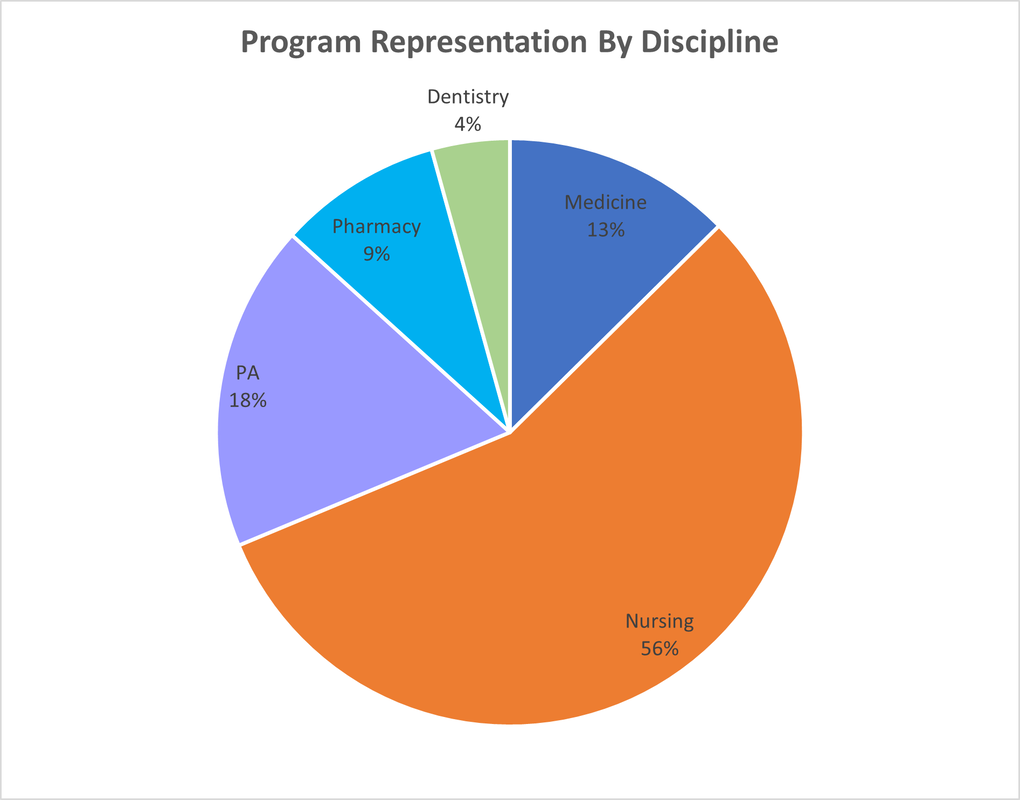
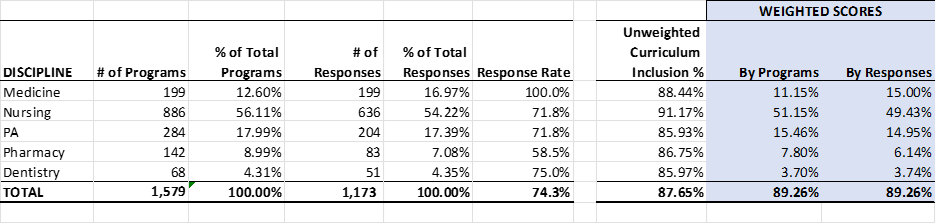
Number of health professions education programs/schools surveyed: 1,579
Number of health professions education programs/schools responses: 1,173
Overall Response Rate: 74.3%
Increase core clinical prevention and population health content in health professions education.
Method
Data is collected by the national education associations representing all schools in five major health professions. In early 2022, baseline data was collected in six core content areas of the Clinical Prevention and Population Health Curriculum Framework to convert developmental objectives to core objectives. Although the Healthy People process resulted in core objectives focusing only on environmental health, the Task Force continues to collect and analyze data on all 6 curriculum content areas for the benefit of the academic community. Mid-decade data will be collected in 2025 and end-of-decade data in 2028.
Numerator: Total number of health professions training program respondents that include the content in required learning experiences.
Denominator: Total number of health professions training program respondents.
Number of health professions education programs/schools surveyed: 1,579
Number of health professions education programs/schools responses: 1,173
Overall Response Rate: 74.3%